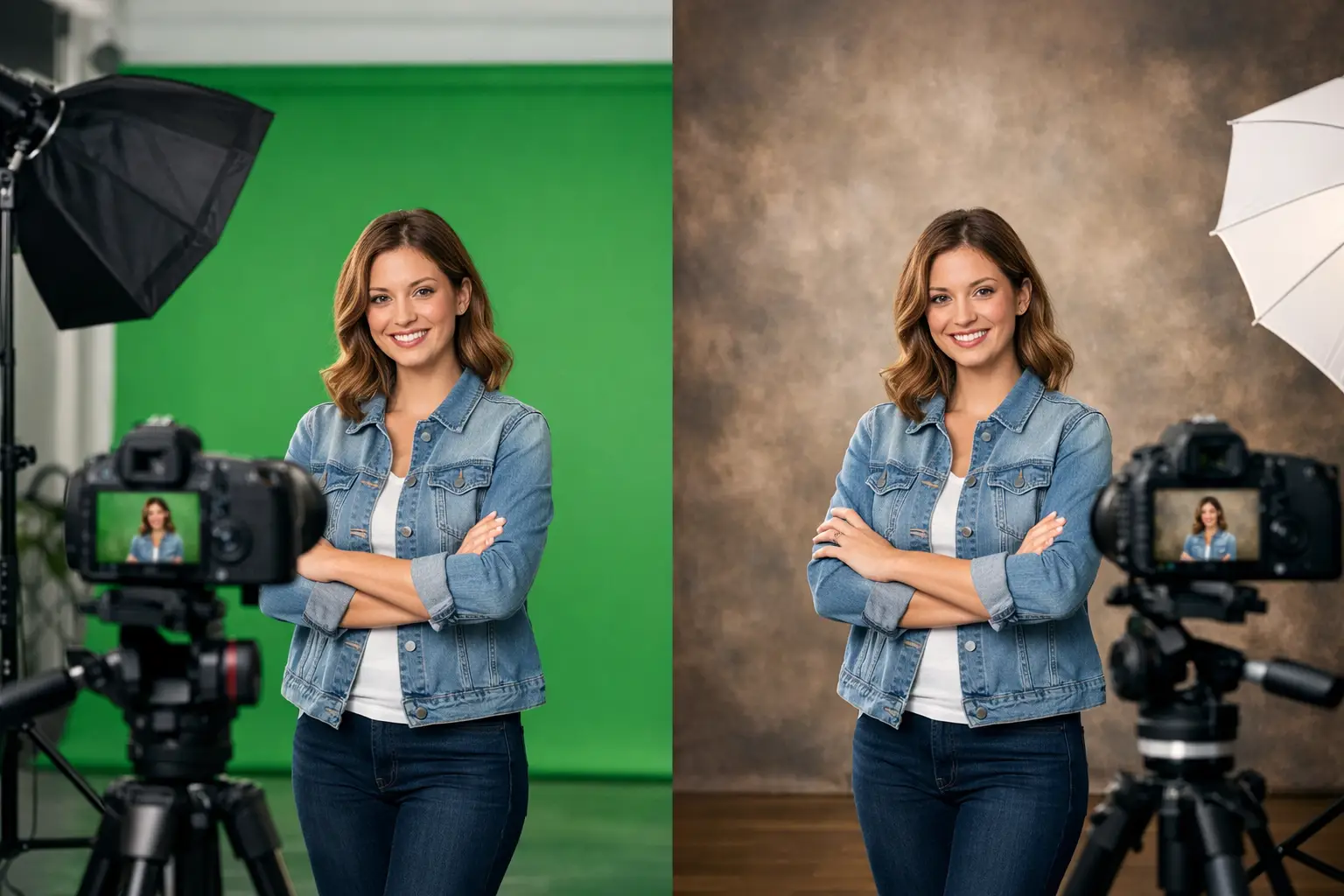
A photo booth can give guests a great picture in front of nearly anything – a floral wall, a step-and-repeat, the Hollywood sign, or a custom scene built around your brand. That is why the green screen vs backdrop photos decision matters more than it may seem. The choice affects the look of every print, how much creative flexibility you have, and whether the booth becomes part of the room’s design or creates a world of its own.
For weddings, milestone parties, corporate celebrations, and entertainment events across Los Angeles and Orange County, there is no one-size-fits-all answer. The right setup comes down to your venue, theme, guest list, and what you want people to take home.
Green Screen vs Backdrop Photos: The Core Difference
A physical backdrop is exactly what guests see behind them when they step into the photo booth. It may be a sleek shimmer wall, a flower wall, a patterned fabric, a branded graphic, or a custom display that coordinates with the event decor. The final image captures the guests and the real backdrop together.
A green screen setup uses a bright green background that is replaced digitally with a selected image or scene. Guests may pose in front of a tropical beach, a red-carpet setting, a movie-inspired landscape, a branded campaign design, or several different virtual backgrounds during the same event.
Physical backdrops create an immediate visual moment in the venue. Green screen creates more possibilities in the finished photo. Both can produce polished, shareable images when the booth is professionally lit, the camera is properly positioned, and an attendant is there to keep the experience moving.
When a Physical Backdrop Is the Better Choice
A backdrop is often the strongest option when the room itself is part of the experience. Picture a wedding reception with warm candlelight, a black-tie gala with a dramatic sequin wall, or a birthday party built around bright florals and custom balloons. Guests can see the photo moment from across the room, which naturally draws them in.
It also gives every photo a consistent, believable setting. There is no digital replacement involved, so details such as flowing dresses, champagne glasses, hats, feather boas, and oversized props appear exactly as they were. This can be especially appealing for couples and planners who want a timeless photo-strip look rather than a heavily edited effect.
Physical backdrops work beautifully for events where the design is intentionally cohesive. If your stationery, linens, lounge furniture, and photo template all follow one color palette, a real backdrop can tie the entire room together. It is also a smart choice for events with a compact booth area, where guests need a simple walk-up experience that feels easy and natural.
The trade-off is variety. Once guests have taken photos in front of one background, every image shares that setting unless you physically change the backdrop. For many weddings and private parties, that consistency is a benefit. For a large brand event or a crowd that thrives on repeat visits, it may feel limiting.
Backdrops shine at events with strong decor
Choose a physical backdrop when you want the booth to look like an intentional part of your event design. It is particularly effective for romantic weddings, elegant receptions, school dances, award nights, holiday parties, and branded activations that need a clean logo moment in every shot.
A quality booth setup still matters. Great lighting flatters guests and gives the backdrop depth, while a thoughtful custom template turns each print into a keepsake rather than a generic souvenir.
When Green Screen Is the Better Choice
Green screen is built for creative range. It lets you take guests somewhere your venue cannot. A company celebrating a product launch can place attendees inside a campaign visual. A Hollywood-themed party can offer a premiere-night scene. A child or teen birthday can move from outer space to a tropical island to a game-inspired world without changing the booth footprint.
That variety keeps guests coming back. One group may take a polished photo against a branded backdrop, then return five minutes later for a funny scene with props. Green screen gives people a reason to create more than one image, which is valuable at events where social sharing, guest engagement, and brand visibility are major goals.
It is also a practical answer when a custom physical backdrop would be difficult, expensive, or impossible to build. If your event theme involves a city skyline, a fantasy setting, a destination wedding mood, or multiple sponsor looks, virtual backgrounds can deliver the concept without filling the venue with extra scenery.
The trade-off is that green screen needs the right conditions. The screen must be evenly lit and guests need enough space to stand in the correct photo area. Very sheer fabrics, reflective items, and clothing close to the green screen color can occasionally create challenges. Experienced attendants know how to guide guests, adjust poses, and keep the line moving without making the process feel technical.
Green screen is a standout for campaigns and high-energy parties
For brand marketers, green screen offers a clear advantage: one activation can support multiple messages. A guest can pose with a product launch background, a sponsor frame, or a themed scene that matches a social campaign. The photos remain fun first, but each one can still carry your visual identity.
It is equally exciting for private celebrations where the host wants an unexpected experience. If the theme is cinematic, travel-inspired, playful, or totally over the top, green screen makes the photo booth part of the entertainment instead of simply a station on the side of the room.
Think About the Guest Experience, Not Just the Sample Image
A backdrop photo can feel immediate. Guests see the setting, grab a prop, and pose. That simplicity is ideal for a mixed-age group, a formal reception, or an event with a fast-moving schedule.
Green screen adds a small element of surprise because guests see the finished scene after the photo is taken. That reveal gets laughs, encourages repeat photos, and works especially well with energetic crowds. The best option depends on what your guests enjoy. A sophisticated dinner crowd may appreciate the elegance of a real floral or shimmer backdrop, while a company party full of teams ready to play may get more mileage from multiple virtual scenes.
Also consider the photo booth itself. An open-air booth gives larger groups room to pose with a visible backdrop, while an enclosed booth can create a more private, nostalgic photo-strip experience. A green screen can work with either format when the space and lighting are planned correctly.
Match the Choice to Your Venue
Venue conditions can make the decision easy. A ballroom, studio, or event space with room for a prominent photo moment is ideal for a statement backdrop. It can become a design feature, not just a photo station.
At a tighter venue, a green screen may offer more visual impact without requiring a large custom installation. It is also useful when the room’s existing walls, carpeting, or architectural details do not match the event theme. Instead of fighting the venue, you can create a finished image that feels fully on-brand.
Outdoor events deserve extra planning. Wind, changing sunlight, and uneven ground can affect any photo setup. A physical backdrop needs to be secured, while green screen requires controlled lighting for the cleanest digital result. Share venue photos and the event timeline with your photo booth provider early so the setup can be tailored to the location.
Budget, Customization, and What Guests Keep
Neither option is automatically the “premium” choice. Premium comes from execution: attractive lighting, crisp image quality, a booth that suits the event, a well-designed print layout, quality props, and staff who know how to manage the experience.
A physical backdrop may be the best investment when it can be reused as decor or when one signature look is all you need. Green screen can add strong value when multiple backgrounds replace the cost and logistics of several physical designs. For a corporate event, it can also help extend one booth activation across different audiences or campaign moments.
Before booking, ask how backgrounds will look in both printed and digital photos, whether your template can be customized, how much space is required, and who will be on-site to operate the booth. These details shape the guest experience far more than a quick online sample image.
Flash Life Photo Booth has seen both approaches energize a room, from polished wedding receptions to high-visibility branded events. The best choice is the one that makes guests want to step in, loosen up, and leave with a photo that feels like it could only have happened at your event.
If you want the booth to blend into an elevated room design, choose a backdrop that earns its place in the decor. If you want guests to pose on a red carpet, in a faraway destination, and inside your campaign world all in one night, give green screen the stage.
Leave a Reply