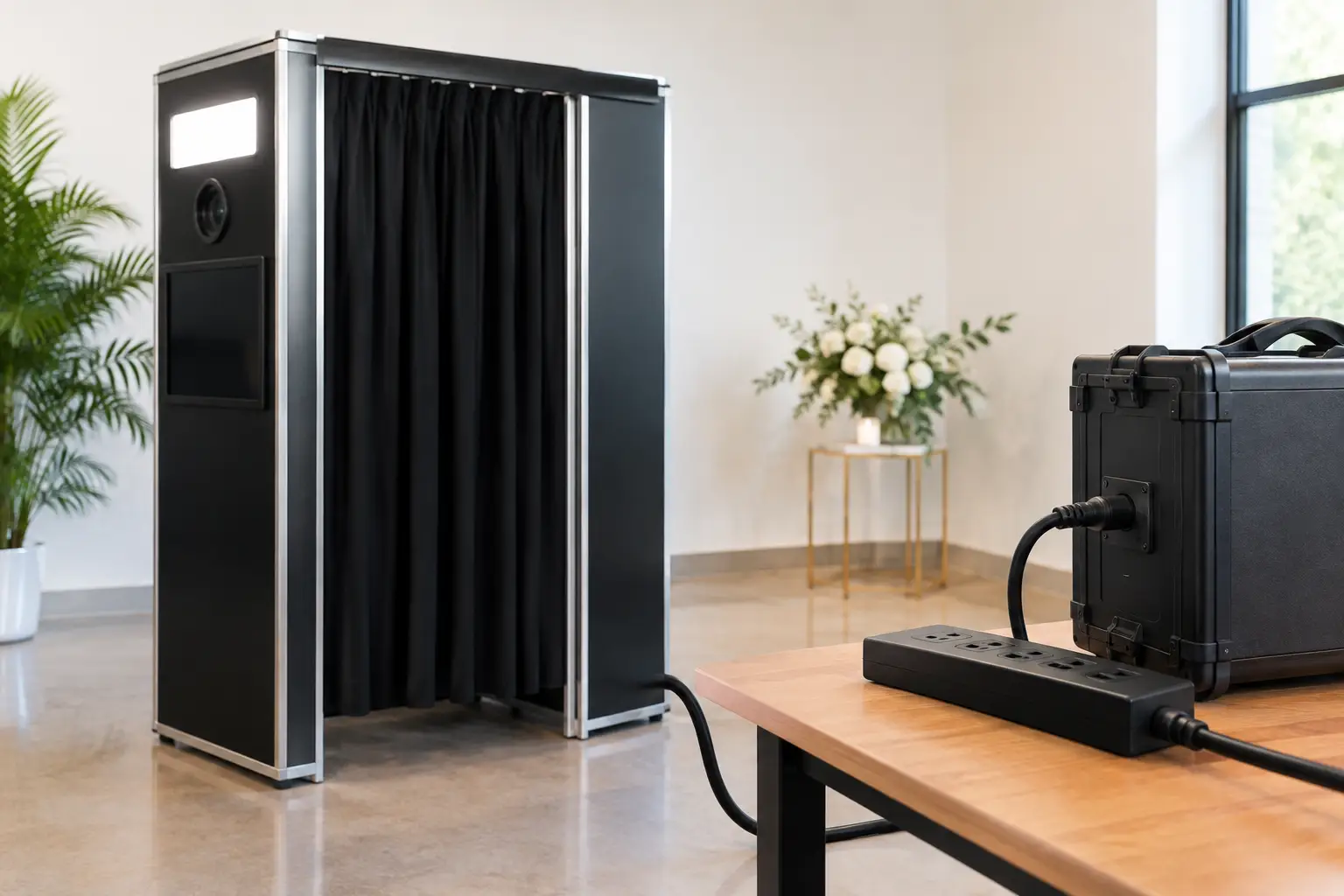
A photo booth arriving at a beautiful venue with no nearby outlet is not a small detail. It can affect booth placement, cable routing, setup time, guest flow, and the polished look you worked hard to create. Knowing how to prepare venue power before event day helps every entertainment element, from a photo booth and 360 experience to the DJ, lighting, and catering equipment, run exactly where it belongs.
For Southern California events, power planning can get complicated quickly. A backyard birthday may have limited exterior outlets. A ballroom may have plenty of power but strict rules about which circuits vendors can use. A branded activation may need clean cable runs that stay completely out of the guest experience. The good news: a few clear conversations with your venue and vendors prevent most problems.
Start With the Venue’s Power Layout
Do not assume an outlet on the wall is available, working, or assigned to your event. Ask the venue coordinator for a current floor plan showing outlet locations, electrical panels, dedicated circuits, and any areas where cords cannot cross. This is especially useful for outdoor patios, rooftops, historic buildings, warehouses, and private residences.
Share your event layout early. Once you know where the bar, dance floor, DJ, dessert table, stage, and photo booth will sit, you can identify whether each feature has reasonable access to power. A booth placed across the room from the nearest outlet may technically work with an extension cord, but it may not look great or be allowed under venue safety rules.
Ask one practical question: which outlets are on separate circuits? Multiple outlets can look independent while sharing the same circuit behind the wall. If a DJ, catering warmer, uplights, and photo booth are all drawing from that one circuit, an overload can trip the breaker at the worst possible moment.
Confirm what the venue permits
Every venue has its own standards. Some require venue staff to handle all power connections. Others prohibit extension cords in public walkways or require cords to be taped down with approved floor covers. Outdoor venues may require weather-rated equipment and protected connections.
If the venue has an in-house AV team or electrician, put them in touch with key vendors before the event. That short conversation is often more valuable than trying to solve a power issue during load-in.
Calculate the Real Power Needs
Not every vendor needs the same amount of electricity. A standard open-air photo booth generally has modest power needs, while a 360 booth, LED lighting package, DJ setup, or catering equipment can require more planning. Ask each vendor for their specific power requirements, including voltage, amperage, number of outlets, and whether they need a dedicated circuit.
For a photo booth, the ideal setup is usually one standard, grounded outlet within a short distance of the booth location. The booth may power a camera, touchscreen, printer, lighting, and laptop or control system. It is dependable equipment, but it should not be competing with a coffee station, portable heater, or ice machine on the same outlet.
A 360 booth deserves extra attention. It often needs a larger footprint, more open space for guests, and a dependable nearby outlet for the platform, lighting, and capture equipment. It may also be positioned near the dance floor, where cables must be managed carefully to preserve both safety and the party energy.
The same goes for green screen experiences. The backdrop, lights, and booth equipment need consistent power to produce the bright, clean images that make custom virtual backgrounds look convincing. Underpowered setups can lead to avoidable interruptions, not the high-impact guest experience you planned.
How to Prepare Venue Power Without Creating Cable Clutter
Power access matters, but presentation matters too. No one wants beautiful wedding décor, branded signage, or a carefully designed lounge interrupted by a maze of cords. Plan the booth location around an outlet whenever possible instead of treating extension cords as the first solution.
When a cord is necessary, use commercial-grade, grounded extension cords that are rated for the equipment and distance involved. Thin household cords are not the answer for professional event production. Long runs can create voltage drop, and poorly placed cords can become a safety concern.
Cable covers are a smart choice for any route that crosses a walkway. They create a cleaner path, reduce trip risks, and help the setup look intentional. The venue may have required covers or specific tape they want vendors to use, so confirm this in advance rather than arriving with a last-minute workaround.
Avoid placing a photo booth directly in front of an outlet if guests will be packed into the area. Give the attendant enough room to access connections, reload paper if needed, and keep the booth experience moving. A little breathing room behind or beside the booth makes operation easier without taking away from the fun.
Protect Your Event From Circuit Overloads
The biggest power mistake is connecting too many high-draw items to one circuit. This can happen easily during cocktail hour, when caterers plug in warming equipment, a band sets up amps, and lighting teams add fixtures at the same time.
Work with the venue to separate major power users. Put the DJ or band on dedicated power when possible. Keep catering equipment on its own circuits. Give the photo booth a reliable outlet that is not being shared with a bar blender, refrigerator, or decorative lighting package.
Be especially careful with portable heaters, air conditioners, and heat lamps. They use more power than many hosts expect and can quickly overload a circuit. If your event is outdoors or in a tent, factor in temperature control early. It should never become an afterthought that steals power from the entertainment.
For larger events, a generator may be the right call. This is common for estate weddings, outdoor brand activations, film-related events, and venues with limited infrastructure. A generator can be a great solution, but it needs professional planning for load capacity, placement, noise, fuel, grounding, and cable routing. It depends on the event scale and equipment list, so do not rent one based on a guess.
Build Power Into Your Vendor Timeline
Power planning works best when it is included in the production timeline, not handled during the final hour before guests arrive. Send the venue a consolidated list of vendors and their needs at least a few weeks before the event. Then confirm the details again shortly before load-in, particularly if the floor plan has changed.
On setup day, make power one of the first checks. Test the assigned outlet before fully building the booth area. Confirm that the circuit stays live, that the connection is secure, and that no other vendor has claimed the outlet. A quick test is much easier than moving a fully assembled setup later.
At Flash Life Photo Booth, our team coordinates setup requirements in advance so the booth can be placed for great photos, smooth guest access, and a clean event look. Still, the strongest results happen when the host, planner, venue, and vendors all have the same power plan before anyone rolls through the loading dock.
Questions to Ask Before Event Day
Bring these questions to your venue walk-through or planning call:
- Where are the nearest working, grounded outlets to the photo booth location?
- Are those outlets on a dedicated circuit, or what else will share that circuit?
- Does the venue provide extension cords, cable covers, or an on-site electrician?
- Are there restrictions for outdoor power, generators, or cables crossing guest areas?
- Who can reset a breaker if one trips during setup or the event?
- Can vendors access power during load-in, or does a venue representative need to unlock panels or rooms?
These answers give your vendors the information they need to arrive prepared. They also help you choose a booth location based on more than appearance alone. The best spot is visible, inviting, close enough to the action, and supported by dependable power.
A great event should feel effortless to guests. When the music is playing, the booth lights are glowing, and every photo is coming out beautifully, nobody is thinking about outlets. That is exactly the point: plan the power early, then let the celebration take center stage.
Leave a Reply