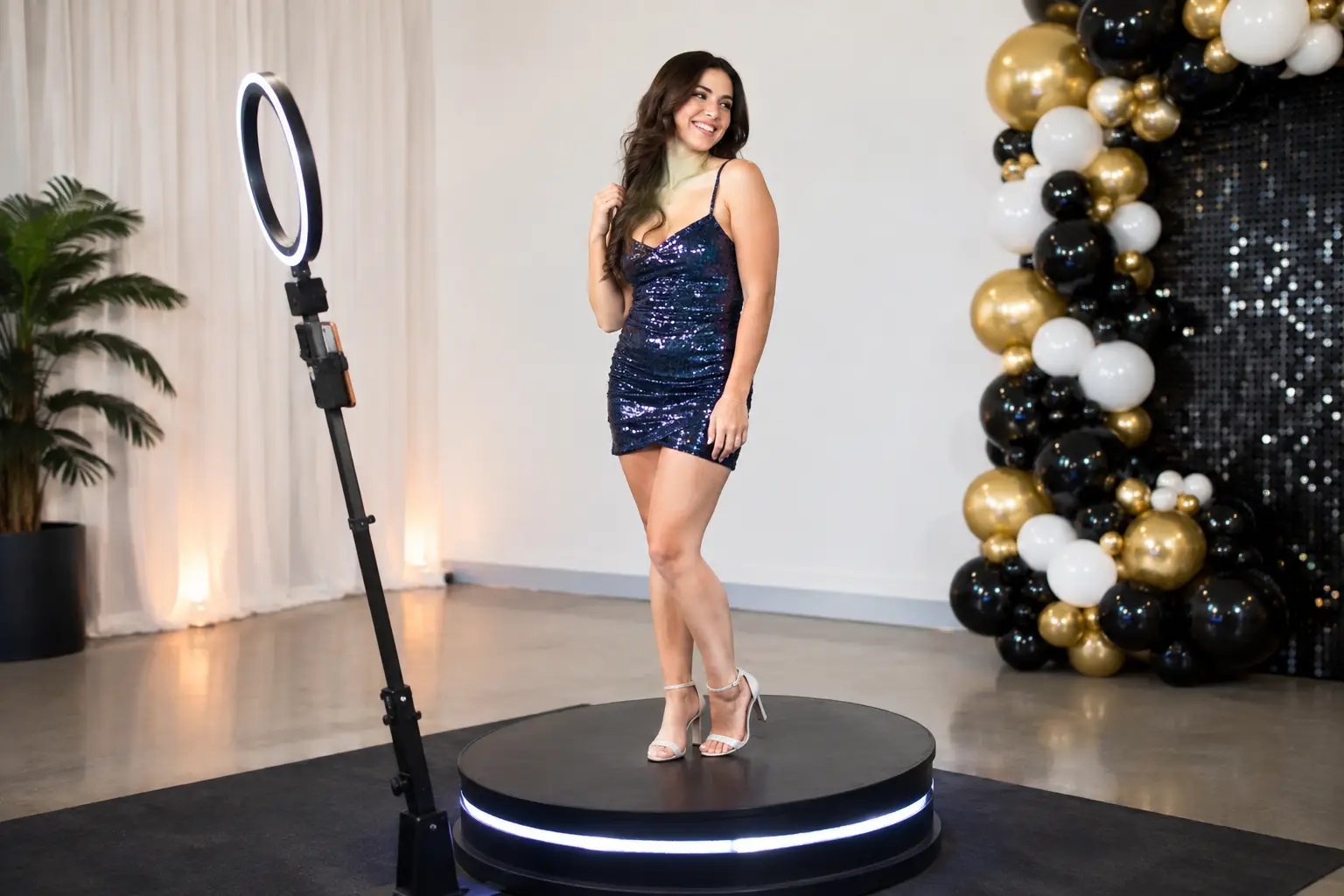
A 360 booth is not the kind of entertainment you tuck into a forgotten corner and hope guests find. It is a high-energy moment: guests step onto the platform, the camera circles, music hits, and a quick video turns into something they want to share before they even leave the event. Knowing how to use a 360 booth well comes down to giving it the right space, timing, and guest flow.
For weddings, brand activations, birthday parties, and Hollywood-style celebrations across Southern California, a 360 booth can create some of the biggest reactions of the night. The difference between a booth that feels electric and one that sits idle is usually planning, not luck.
How to Use a 360 Booth Without Slowing Down Your Event
The basic experience is simple. One to four guests, depending on the platform size and package, step into the booth area. A camera mounted on a rotating arm moves around them while they pose, dance, toss props, or strike their best red-carpet entrance. The footage is typically processed into a polished slow-motion video with effects, music, branding, or an event overlay.
But the best results happen when guests understand what to do before the arm starts moving. A professional attendant should welcome each group, position them safely, explain where to look, and keep the line moving. That small amount of direction matters. It helps camera-shy guests relax and gives outgoing guests permission to bring the energy.
A strong 360 booth experience should feel easy. Guests should not have to figure out where to stand, whether they can bring a drink onto the platform, or how they will receive their video. Those details should already be handled by the booth team.
Give Guests a Simple Prompt
People perform better with a clear idea than with the instruction to just have fun. An attendant might suggest a slow spin, a champagne-toast pose, a synchronized wave, a jacket flip, or a quick dance move. For a corporate event, branded props or a product reveal can give every clip a consistent purpose.
Keep each session short enough to maintain momentum. A 360 booth is built for repeat participation, so the goal is not one long production. It is a series of fast, fun videos that keep the line excited and let more guests participate.
Choose a Location That Creates Energy
Placement is one of the biggest decisions you will make. A 360 booth needs enough open floor space for the platform, rotating camera arm, lighting, attendant, queue, and safe guest access. It also needs room for people to watch. Spectators are part of the experience because they see the action, laugh, and decide they want a turn.
For most receptions and parties, place the booth near the main action without putting it directly in the path of dinner service, bar traffic, or a busy doorway. Near the dance floor often works beautifully once the party has picked up. For a corporate gathering, a location near the entrance, cocktail area, or branded activation zone can create immediate engagement.
Avoid squeezing the booth between tables or placing it in a dim back room. You want visibility, but not chaos. The ideal spot has a clear sightline, reliable power access, and enough space for a line that will not block the event.
Think About Sound, Light, and Background
A 360 booth brings its own visual impact, but its surroundings still matter. Decorative lighting, a balloon installation, a flower wall, a step-and-repeat, or a clean branded backdrop can elevate the finished video. If your venue has dramatic architecture or a great view, positioning the booth to capture that environment may be the better choice.
Music adds energy, especially during a birthday party, school event, or brand celebration. Still, the booth should not compete with speeches, a live performance, or a key presentation. If formal programming is happening nearby, plan for the booth to open during cocktail hour, after dinner, or once the dance floor is active.
Lighting is another reason professional equipment and operation matter. A phone video in a poorly lit ballroom can look flat or grainy. Quality lighting helps guests look their best and keeps every frame sharp, colorful, and ready to share.
Set Up the Booth Before Guests Arrive
A 360 booth should be fully tested before the first guest steps onto the platform. That includes checking the camera rotation, lighting, software, sharing method, power connection, and any custom overlays or branded elements. Event-day setup is not the time to decide where the booth will go.
Share venue details with your rental company ahead of time. Let them know the load-in route, setup floor, elevator access, event start time, ceiling or space limitations, and whether the booth will be indoors or outdoors. Outdoor events can look incredible, especially at sunset, but they require a level surface, weather protection, and a plan for wind, heat, or rain.
At Flash Life Photo Booth, experienced on-site staff handle setup and guest interaction so hosts can focus on their event instead of troubleshooting equipment. That is especially valuable when you are coordinating a wedding timeline, managing a large corporate guest list, or trying to enjoy your own celebration.
Make the First Few Videos Count
Guests take cues from the room. If no one uses the booth in the first hour, others may assume it is not open yet. Start strong by inviting the wedding party, birthday VIP, executive team, family members, or a few high-energy friends to create the first round of clips.
For a wedding, the couple can film a quick video after the grand entrance or during open dancing. At a company party, ask leadership or the event team to kick things off. For a brand activation, use staff or ambassadors to demonstrate the experience and show guests how the final video looks.
Once people see the slow-motion result on a sharing screen or receive it on their phones, participation usually builds quickly. The booth becomes both entertainment and content creation, which is exactly why it works so well for social celebrations and high-visibility events.
Keep It Safe and Comfortable
The rotating arm is exciting, but guests need to respect the booth area. Only the approved number of participants should stand on the platform at once. Guests should keep hands, bags, loose clothing, and drinks clear of the moving equipment. Very young children should be supervised, and anyone who feels unsteady should not be encouraged to jump, lean, or move unpredictably during the capture.
A trained attendant makes this feel natural rather than restrictive. They can pause between groups, reset props, explain the boundaries, and make sure every participant has a safe, enjoyable turn. This is one of the trade-offs between a professional rental experience and a DIY setup: the equipment alone does not create a polished guest experience.
Also consider footwear and attire. Guests in long gowns, flowing veils, oversized costumes, or high heels can absolutely participate, but they may prefer a simple pose over a dramatic spin. Good direction lets everyone look great without taking unnecessary risks.
Customize the Video for Your Event
A 360 booth should reflect the event, not feel like a generic add-on. Custom video overlays can include names, dates, wedding monograms, event hashtags, company logos, campaign messaging, or a themed visual treatment. The right design turns every clip into a keepsake for private parties and a useful piece of branded content for corporate events.
Customization works best when it supports the event’s overall look. A black-tie gala may call for a clean, elegant overlay. A milestone birthday can go bold with color and playful effects. A product launch may need a logo that remains visible without covering guests’ faces or overwhelming the footage.
Do not overdesign it. A simple, polished template usually photographs better than a crowded frame full of tiny text. Your guests are the stars of the video.
Plan the Sharing Experience
Guests want their videos quickly. Decide whether the experience will use text message delivery, email delivery, a sharing station, or another event-approved method. For branded events, confirm any data collection requirements and privacy expectations before guests arrive.
Venue Wi-Fi can be unpredictable, particularly in large ballrooms, outdoor spaces, and busy event locations. A professional team will have a practical workflow for capturing videos even when service is spotty, then delivering them as connectivity allows. Ask about this before booking so there are no surprises on event day.
It also helps to tell guests how sharing works. A small sign or a quick verbal explanation from the attendant prevents confusion and keeps the line moving.
Match the Booth to the Moment
A 360 booth shines when the event calls for movement, personality, and a little spectacle. It is a natural fit for receptions, launch parties, award nights, sweet 16s, quinceañeras, school celebrations, employee appreciation events, and milestone birthdays. It may be less ideal for a very quiet dinner, a tight venue layout, or an event where the schedule leaves little room for guest interaction.
If your priority is printed photo strips, large group portraits, or a classic posed experience, an open-air or enclosed photo booth may be the better choice. If you want cinematic movement and shareable clips, the 360 booth earns its space. Some larger events benefit from both, giving guests different ways to participate.
The best 360 booth moments happen when guests feel comfortable stepping in, being a little extra, and seeing themselves look fantastic on screen. Give the booth room to perform, let your attendant guide the fun, and watch it become the place everyone talks about on the ride home.
Leave a Reply