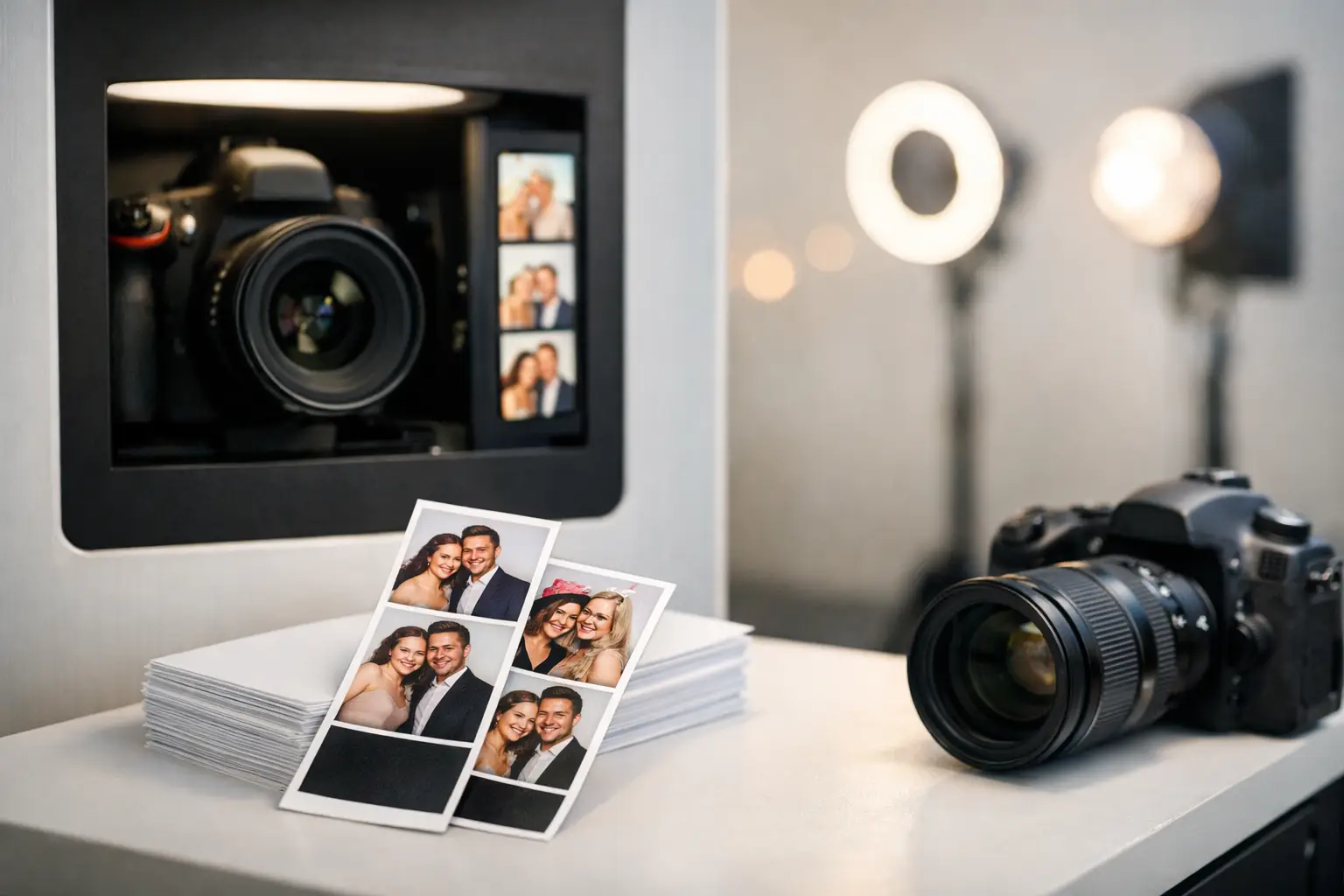
When a photo booth looks great on a booking page but delivers dim prints, awkward cropping, and a bored attendant on event night, the problem is not bad luck. It is a failure in photo booth quality standards. For weddings, brand activations, school events, and upscale private parties, quality is not one thing. It is the full chain of equipment, lighting, design, staffing, and execution working together under pressure.
That matters even more in Southern California, where guests have seen enough events to know the difference between a polished booth experience and a budget add-on. If you are booking for Los Angeles, Orange County, Hollywood, or nearby markets, the booth has to do more than exist in the corner. It needs to photograph people well, move efficiently, match the event, and hold up all night.
What photo booth quality standards really include
Most people start with the photos, which makes sense. If the images are soft, overexposed, badly lit, or printed on flimsy stock, guests notice immediately. But real quality standards go beyond image sharpness.
A strong booth should produce flattering light for different skin tones, heights, and group sizes. It should have a camera and lens setup that creates clean, crisp images instead of grainy snapshots. The print output should be consistent from the first session to the last. Digital sharing should also be fast and reliable, because guests expect to post and send their photos without waiting around.
Then there is the experience side. A beautiful booth can still fail if setup runs late, props look worn out, the backdrop wrinkles, or the attendant cannot manage a line. That is why the best photo booth quality standards cover both production quality and service quality. One without the other feels incomplete.
The camera and lighting are the real baseline
If a booth company cannot explain how it creates flattering photos, that is a red flag. High-quality booths do not rely on a tablet camera and hope for the best. They use professional-grade imaging equipment and lighting that is designed for events, not improvised for convenience.
Lighting is often the difference between photos guests keep and photos they forget. A solid setup creates even illumination without blowing out faces or leaving shadows under eyes. It should also be adjustable for the room. Ballroom lighting, outdoor cocktail hour lighting, and nightclub lighting all behave differently. A booth that performs well in one setting may struggle in another if the operator does not know how to adapt.
This is where experience shows. The right team checks the venue conditions, positions the booth carefully, and fine-tunes for the environment. That sounds simple, but it is one of the clearest separators between premium service and a low-cost rental.
Why flattering photos are the standard, not a bonus
Guests do not care how advanced the camera is if they do not like how they look. The standard should be flattering, consistent photos across a full event guest list – couples, kids, grandparents, large groups, and fast-moving party crowds.
That means enough lighting coverage, proper framing, and a booth style that works with the type of event. Open-air booths can be excellent for larger groups and branded environments. Enclosed booths create a more private, nostalgic feel and often bring out a different kind of guest energy. Green screen setups demand even more technical precision because lighting and subject separation have to be right or the final image looks fake.
Print quality still matters more than people think
Digital sharing gets plenty of attention, but print quality is still one of the easiest ways to judge standards. Cheap prints fade, curl, smear, or feel disposable. Premium prints look sharp, feel substantial, and hold their color.
There is also a design factor. The photo template should look intentional, not like clip art from ten years ago. Fonts, spacing, logo placement, and event branding all need to feel clean and cohesive. At a wedding, the print should feel worthy of a keepsake. At a corporate event, it should feel on-brand without looking forced.
This is one area where customization matters. A company that handles design thoughtfully is usually paying attention elsewhere too. Details tend to travel together.
Staffing is part of the quality standard
One of the biggest mistakes event hosts make is judging a booth by equipment alone. The attendant is part of the product.
A strong on-site team member keeps the booth running, guides guests naturally, solves small issues before they become obvious, and maintains the pace of the experience. They know when to be energetic and when to stay in the background. At a wedding, that may mean helping guests jump in quickly between dances. At a branded event, it may mean keeping traffic moving while preserving the client experience.
A weak attendant does the opposite. The booth gets messy, guests get confused, and the line slows down. Even great hardware cannot hide poor service.
Smooth setup is not optional
Setup should be organized, early, and venue-aware. That means knowing power needs, load-in timing, footprint requirements, and traffic flow. It also means presenting a clean setup from every angle. Loose cables, crowded prop tables, and a booth jammed into a dark corner weaken the whole effect.
For planners and hosts, professionalism behind the scenes is part of what you are paying for. You should not be managing your booth vendor on event day.
Booth style should match the event, not just the package
Not every booth format meets the same quality standard for every event. It depends on the crowd, the venue, and the event goals.
An open-air booth is ideal when you want visibility, larger group shots, and flexible backdrop styling. It becomes part of the room energy. An enclosed booth creates a more intimate guest moment and often works well for parties where the booth itself is part of the nostalgia and fun. A green screen booth can be a standout for themed parties and corporate activations, but only if the virtual backgrounds are convincing and the execution is clean. A 360 booth creates motion content and social excitement, but it requires enough space, crowd management, and production polish to feel elevated rather than chaotic.
That is the trade-off many clients miss. The most popular booth type is not always the right one. The real standard is fit. The booth should make sense for the event instead of forcing the event to adapt to it.
Reliability is where premium service earns its price
Anybody can promise fun. The better question is whether the booth will perform for the full run of the event.
Reliable service means equipment that is maintained properly, backup plans for technical issues, and a team that has done enough events to stay calm when conditions change. Maybe the timeline shifts. Maybe the venue changes the layout. Maybe guest traffic surges all at once. A quality provider adjusts without letting the event feel the disruption.
This is especially important for high-visibility events where timing and presentation matter. Weddings do not get a second take. Corporate events do not want branding errors. School and milestone events need vendors who can handle excitement without losing control of the flow.
A seasoned company like Flash Life Photo Booth builds quality into the full process – custom design, strong lighting, polished booth options, and trained staff who know how to deliver under live event conditions. That kind of consistency is what clients remember.
How to judge quality before you book
The easiest way to evaluate a booth company is to ask specific questions and look for specific proof. Ask what camera and lighting setup they use, but also ask to see full sample galleries rather than a few hero images. A single great photo proves very little. A full event gallery shows consistency.
Ask about print materials, template customization, and who handles design. Ask whether an attendant is included and what that person actually does on-site. Ask how early they arrive, how they handle venue coordination, and what backup plans they have if equipment fails.
You should also pay attention to how they communicate before the event. Fast, clear, confident communication is usually a preview of event-day performance. If getting basic answers is difficult during booking, it rarely gets easier later.
The cheapest booth is usually expensive in the wrong ways
Budget matters. Every client has a number in mind. But there is a difference between value and cheap.
A low quote can mean weaker equipment, weaker staffing, generic templates, lower print quality, or less reliable execution. Those shortcuts may not show up in a package description, but they show up fast in the guest experience. If the booth is part of the entertainment and part of what guests take home, that is not a smart place to cut corners.
The better approach is to ask what standard you want your event to meet. If the answer is polished, fun, and memorable, then the booth should support that from first photo to final teardown.
The right photo booth does more than hand out strips. It adds energy to the room, gives guests something they actually want to keep, and makes the host look like they chose well.
Leave a Reply