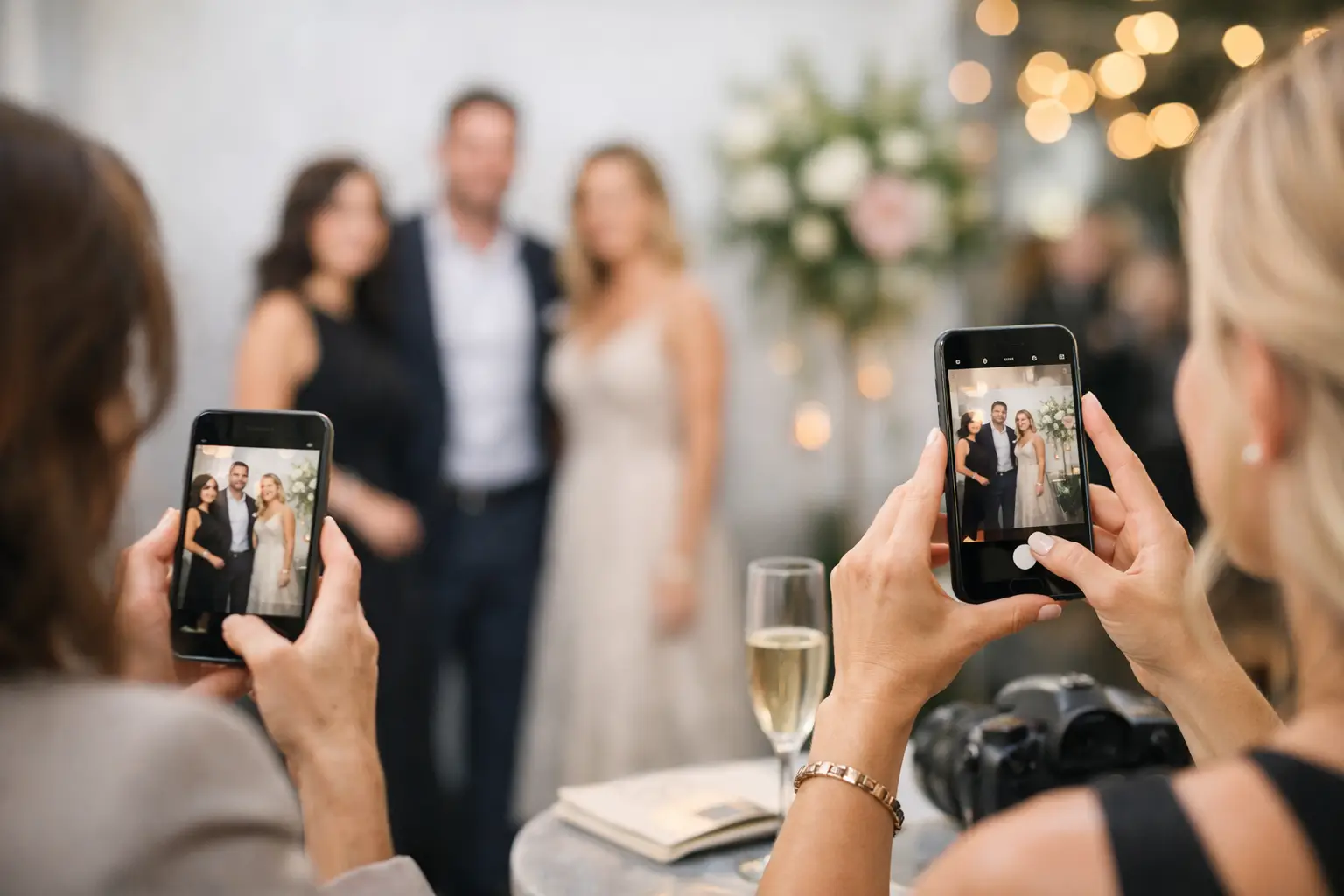
A great event photo should do more than prove someone was there. It should carry the look, energy, and personality of the celebration long after the last song ends. Learning how to brand event photos gives every guest a polished keepsake and gives your event a visual identity that lives on in camera rolls, group chats, and social feeds.
For a wedding, branding may mean a refined monogram and colors that match the invitation suite. For a product launch or company party, it may mean turning every photo into a clean, shareable extension of the campaign. The goal is the same: create photos that feel intentionally yours, not like generic photo booth strips with a logo added at the last second.
Start With the Event’s Visual Point of View
Before selecting a backdrop, photo template, or prop, get clear on the event’s visual direction. Pull from the details that already define the experience: invitation colors, florals, venue architecture, a brand campaign, dress code, or a milestone theme. Those choices should guide the photo moment rather than compete with it.
A corporate event with a sleek black-and-gold campaign can support a bold graphic frame and a clean branded step-and-repeat. A garden wedding may call for softer tones, delicate typography, and an open-air setup that lets the venue shine. A birthday party in Los Angeles with a high-energy guest list may benefit from a colorful green screen scene or a glam backdrop that feels made for posing.
Do not try to fit every visual idea into one image. The best branded event photos usually have one strong focal point, supported by a few consistent design details.
Choose a Design Priority
Decide what guests should notice first. It could be the couple’s names, a campaign slogan, a product, a special date, or a custom backdrop. Once that priority is set, the rest of the design becomes easier. If a company logo is the priority, give it breathing room. If the wedding monogram is the hero, do not crowd the template with extra icons, hashtags, and decorative copy.
Design a Photo Template People Want to Keep
The photo template is the printed or digital frame around the images. It is one of the easiest and most effective ways to brand event photos because it travels home with guests. It also appears in every digital share.
A strong template uses the event colors, readable fonts, and a layout that leaves plenty of room for faces. This last part matters. Guests are there to see themselves having fun, not to appear in tiny boxes beneath an oversized logo.
For weddings and private parties, a name, date, or short phrase is usually enough. For branded events, use the company logo, event name, and campaign language with restraint. A call to action can work, especially for a launch or promotional event, but it should not make the photo feel like an ad. Guests share images that make them look good first.
Consider how the design works in both print and phone formats. A narrow photo strip can feel classic and collectible, while a 4-by-6 layout gives groups more room and creates a more editorial look. Digital-only experiences can use animated overlays, branded boomerangs, GIFs, or short video treatments, but the graphics still need to be easy to read on a small screen.
Use the Backdrop as Part of the Brand Experience
A backdrop does more than fill empty space. It sets the visual quality of every single photo. When the backdrop clashes with the template or lighting, even the best poses can look disconnected.
For corporate functions, a branded step-and-repeat can be the right move when logo visibility is a major goal. Keep the logo scale practical. Logos that are too large become distracting, while logos that are too small disappear in group shots. A repeated pattern with enough negative space photographs more cleanly than a crowded wall of marks.
For weddings, birthdays, and upscale celebrations, a premium fabric backdrop, shimmer wall, floral installation, or custom color treatment may serve the event better than obvious branding. The personal brand is the atmosphere. A well-chosen backdrop can carry that identity without putting names across the entire frame.
Green screen is especially useful when physical scenery is not practical or when you want guests to choose from several branded worlds. It can place guests on a red carpet, in a campaign environment, on a tropical getaway, or against custom artwork. The trade-off is that green screen needs capable lighting, thoughtful artwork, and professional setup to look convincing. A weak cutout effect can make a premium event feel less polished.
Make Sure the Photos Look Worth Sharing
Branding cannot rescue poor image quality. If photos are dark, harshly lit, blurry, or poorly composed, guests will not post them, no matter how attractive the overlay is.
Prioritize flattering lighting and a booth setup that gives groups room to pose. Open-air photo booths work well for large groups, statement backdrops, and venue-forward events. Enclosed booths create a more private, nostalgic experience that can encourage guests to get playful. A 360 booth brings movement and high-impact video content, but it needs enough floor space and a guest flow plan so it does not become a traffic jam.
This is where an experienced photo booth team earns its place in the event plan. Staff should be ready to guide guests, keep the line moving, adjust small issues quickly, and make sure the setup stays camera-ready throughout the event. Flash Life Photo Booth builds the experience around that mix of standout visuals, custom design, and hands-on event support.
Put Your Branding in the Right Places
Not every surface needs a logo. In fact, over-branding is one of the quickest ways to make an event photo feel less special. Use visible branding where it has a job to do, then let the guest experience carry the rest.
Your template is usually the most reliable placement because it appears on every image. The backdrop can reinforce the theme or brand, while the digital gallery and sharing screen can add another touchpoint. Props can support a campaign too, particularly when they feature recognizable phrases or product-related shapes, but they should still be fun enough for guests to grab.
For corporate events, consider the journey from photo to share. A branded email or text delivery screen can extend the experience without placing more graphics on the actual image. For social-focused activations, a campaign hashtag can be included subtly on the template or display signage. It depends on the audience. A formal gala may favor quiet elegance, while a festival-style brand activation can handle louder, more playful messaging.
Plan for Real Guest Behavior
The most beautiful photo concept can fall flat if guests do not understand where to stand, what to do, or whether they can share the result. Make the booth inviting from across the room. Good lighting, an appealing backdrop, and an energetic attendant do more to attract participation than a lengthy instruction sign.
Think about timing, too. At a wedding, the booth often gets busy after dinner and once dancing starts. At a corporate event, guests may use it most during arrival, cocktail hour, or a planned break between presentations. Position the booth where it is visible but not blocking the bar, buffet, stage access, or major traffic paths.
If the event includes VIPs, executives, or talent, give them a reason to participate early. Their photos create momentum. Once people see colleagues, friends, or the guest of honor having a great time, the line builds naturally.
Test the Details Before Event Day
Custom graphics should be reviewed before production, not while guests are waiting. Check spelling, dates, logos, color accuracy, and whether the artwork looks balanced around different group sizes. A template that looks perfect with two people can feel awkward when eight friends squeeze into the frame.
Also confirm practical details with the venue: load-in access, setup time, power, Wi-Fi expectations, ceiling height for certain backdrops, and the footprint needed for the booth type. A smooth setup protects the guest experience and keeps the branded moment looking effortless.
Let the Photos Carry the Memory Forward
The strongest branded event photos feel less like marketing materials and more like proof that the event was worth attending. They capture the laughter, the outfits, the unexpected group poses, and the people who made the room feel alive.
Choose branding that frames those moments instead of overpowering them. When guests receive a photo that looks polished, feels personal, and matches the event they just enjoyed, sharing becomes the natural next step.
Leave a Reply