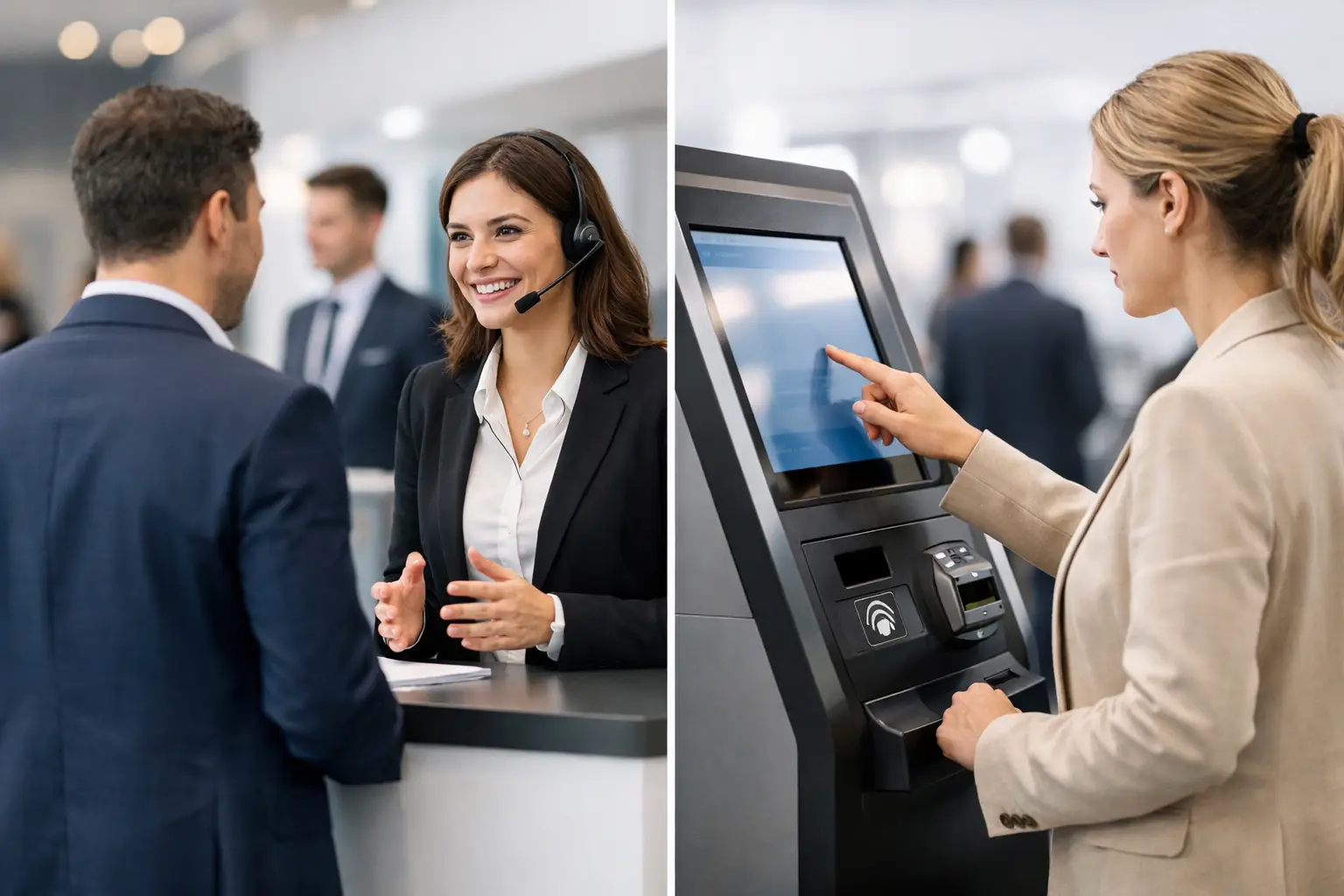
A photo booth can be the moment guests talk about on the ride home – or the forgotten setup in the corner that only a few people try. When comparing a staffed booth versus self service experience, the real question is not simply whether someone presses a screen alone. It is whether you want an interactive entertainment feature that builds momentum or a hands-off photo station that guests use whenever they happen to notice it.
For weddings, corporate events, birthday parties, and red-carpet-style celebrations across Los Angeles and Orange County, that distinction can change the entire feel of the event. Both formats have a place. The best choice depends on your guest count, venue, schedule, budget, and how much energy you want the booth to bring to the room.
What Is a Staffed Photo Booth?
A staffed photo booth includes a trained on-site attendant who handles setup, keeps the booth running, assists guests, and helps create a fun, organized experience. They are there before the first photo is taken and remain available throughout the booked service time.
That sounds simple, but it makes a major difference at a live event. An attendant can invite a hesitant group over, show guests how the experience works, adjust a prop area that has gotten a little too enthusiastic, and help grandparents, kids, or less tech-comfortable guests enjoy the booth without frustration.
With a premium staffed booth, the attendant is also protecting the quality of the experience. They check lighting, keep the area looking polished, restock props, troubleshoot quickly, and help groups fit into the frame. If a guest wants another shot because someone blinked, they can keep the energy high rather than turning a small issue into a line-stopping problem.
What Does Self Service Mean?
A self-service photo booth is designed for guests to operate independently. The interface guides them through taking photos, GIFs, or short videos, often with touch-screen prompts and automatic sharing options. There may be no attendant present during the event, or the booth may be dropped off and picked up later depending on the provider and package.
Self service can work well for casual environments where flexibility matters more than active entertainment. Think office lobbies, smaller open houses, extended installations, or low-key gatherings where guests will naturally explore the booth throughout the day.
The trade-off is that the booth must do all the work itself. If guests do not understand the screen, if the lighting gets bumped, if paper needs replacing, or if a technical issue appears, there may be no one nearby to solve it. Even a beautifully designed booth can lose momentum when guests are left to figure things out on their own.
Staffed Booth Versus Self Service: The Guest Experience
The biggest difference is guest participation. A self-service booth is passive. It waits for people to approach it. A staffed booth is active. It creates a welcoming reason for people to step in, grab props, pull in friends, and make a memory.
At a wedding reception, for example, the couple has likely invested in flowers, music, food, and a setting that reflects their style. A booth attendant helps the photo experience feel equally intentional. They can keep groups moving so guests are not waiting too long, encourage a shy aunt to join the fun, and help capture those full-of-personality group shots that rarely happen with a phone.
For branded events, the stakes can be even higher. Your photo booth is often a guest touchpoint, a content generator, and a visual extension of the brand. A trained attendant makes sure the branded template, virtual background, and sharing flow are presented correctly. They can also keep the booth area looking camera-ready while your team focuses on guests, programming, and event goals.
Self service may be enough when the booth is a convenient add-on rather than a central attraction. If you are hosting a small gathering with a tech-savvy crowd and plenty of time for guests to use it at their own pace, it can be a practical choice. But if you want a noticeable boost in room energy, a staffed experience usually delivers more.
When a Staffed Booth Is Worth It
A staffed booth is especially valuable when there is a lot happening at once. Events are unpredictable by nature. Cocktail hour starts late, dinner runs long, a large group suddenly wants a photo together, and someone needs help using the sharing station. An experienced attendant manages those moments without asking the host, planner, or venue team to step away from their responsibilities.
It is also the stronger choice for premium booth formats. An open-air booth needs thoughtful guest direction so groups use the full backdrop and stay within the best-lit area. An enclosed booth benefits from someone keeping the entrance clear and the experience moving. Green screen experiences require careful setup and guest positioning so virtual backgrounds look convincing. A 360 booth has safety, spacing, and guest-coordination needs that should not be left unattended.
At Flash Life Photo Booth, on-site staff are part of the polished experience: helping guests feel comfortable, keeping the booth looking great, and making sure the fun never turns into a technical distraction.
A staffed option is also a smart call when your guest list spans generations. Younger guests may fly through a touch-screen experience, while others appreciate a friendly person who can explain the process in a few seconds. Nobody should feel like they need instructions just to take a party photo.
When Self Service Makes Sense
Self service is not automatically the lesser choice. It can be exactly right when the event calls for a quieter, more independent setup. A daytime company activation that runs for several hours may benefit from an always-available photo station. A small employee party may not need a host guiding every group. A private event with a limited budget may prioritize having a booth at all over adding a dedicated attendant.
It can also suit guests who prefer a little privacy. Some people are more playful when they can take photos without an audience or direct interaction. An enclosed booth with a simple self-operated flow can create a relaxed, nostalgic feel, particularly for smaller parties.
Still, make sure self service is truly self service by design, not simply an unattended booth with no support plan. Ask how the equipment is tested, what happens if there is a technical issue, whether remote support is available, and who handles setup and teardown. The lowest-touch option should not create extra work for the host.
Think About Your Event Timeline
Your timeline often tells you what kind of service you need. If you have a two-hour reception window, a packed corporate program, or a birthday party with a peak activity period, you want guests moving confidently through the booth. A staff member can manage the pace and help more people participate before the event ends.
If your event runs all day with a loose schedule, self service may have room to breathe. Guests can visit between sessions, during breaks, or whenever they want. There is less pressure to create a fast-moving line because the booth is available over a longer window.
Consider the placement, too. A booth near the dance floor or main action benefits from staff because it will attract groups quickly and need active flow management. A booth in a quieter lounge area may be suitable for self-directed use, provided signage, lighting, and instructions are clear.
Quality Is More Than the Camera
Hosts sometimes compare packages by looking only at the booth style, digital sharing features, or number of prints. Those details matter, but service is part of photo quality. Great images need more than a good camera. They need flattering lighting, a clean lens, guests positioned well, and a booth area that stays organized from the first photo to the last.
An attendant notices when a backdrop has shifted, when a prop is blocking the frame, or when a group of eight is trying to squeeze into a space meant for four. They can offer quick direction without making the experience feel staged. That small amount of guidance often produces the photos guests actually post and keep.
For a branded activation, consistency matters even more. Every image becomes a reflection of your event. Staff support helps maintain the visual standard you planned for, from the template and backdrop to the guest flow around the booth.
Four Questions Before You Choose
Before booking, ask yourself four practical questions:
- Will the booth be a main entertainment feature or simply an optional activity?
- How many guests may use it during the busiest hour?
- Is anyone on your event team available to handle issues if the booth is unattended?
- Does your chosen experience, such as green screen or 360 video, need active guidance for the best result?
If your answers point to a high-energy event, a tight schedule, a large crowd, or a visually important activation, staff support is likely worth the investment. If the event is relaxed, extended, and intentionally low-touch, self service can be a great fit.
The right photo booth should make your event easier to enjoy, not give you one more thing to manage. Choose the format that matches the level of energy you want in the room, then let your guests do what they came to do: laugh, celebrate, and leave with photos that feel as good as the night itself.
Leave a Reply