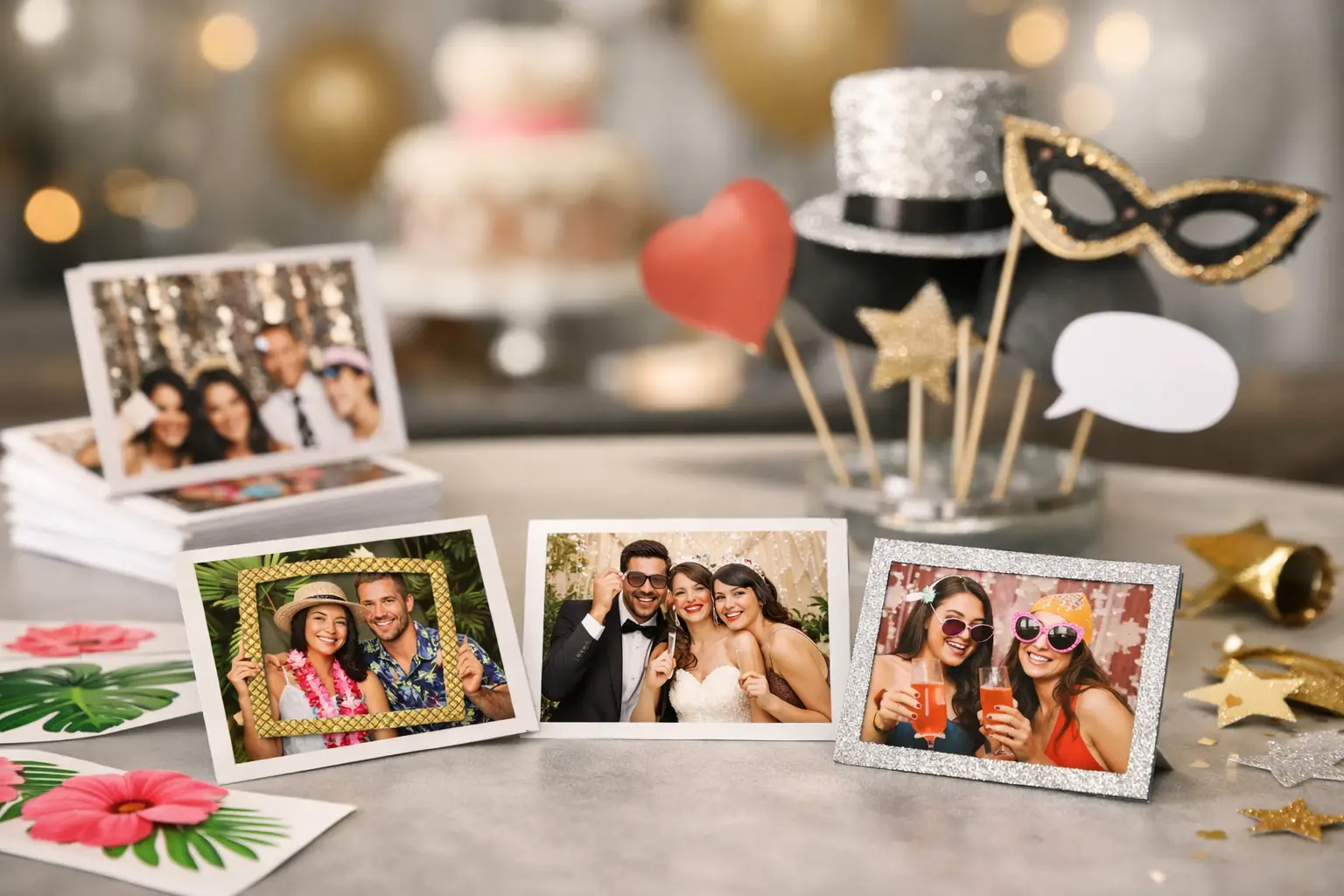
A photo booth can keep a dance floor buzzing, but the print is what guests take home. Knowing how to personalize event photo prints turns a fun photo into a keepsake that feels made for your wedding, birthday, launch party, or company celebration. The best designs do not compete with the people in the picture. They frame the moment, reinforce the event’s personality, and still look great on a fridge weeks later.
For Southern California events, where presentation matters and guests are quick to share what looks good, a custom print design is not an afterthought. It is part of the experience.
Start With the Event’s Big Visual Idea
Before choosing fonts, borders, or hashtags, get clear on the visual direction. A photo print should feel like it belongs at the event, whether that means timeless black-and-white elegance, Hollywood glamour, a colorful birthday theme, or a clean branded look for a corporate activation.
Start with the invitation, event signage, floral palette, step-and-repeat, or brand guidelines. You do not need to copy every design element. In fact, trying to squeeze every detail onto a small print usually creates visual clutter. Choose one or two signature elements, such as a color pairing, a pattern, a monogram, or a graphic icon, and let those do the work.
A beachside wedding in Orange County may call for warm neutrals and a subtle wave motif. A Los Angeles product launch may be stronger with a bold color field, a crisp logo treatment, and room for a campaign hashtag. The goal is recognition, not overload.
Choose a Print Layout That Fits the Moment
The layout shapes both the guest experience and the final design. A classic photo strip is social, recognizable, and easy to display. It gives guests multiple chances to loosen up, change poses, and create a little story from top to bottom. It is a natural choice for birthdays, weddings, school events, and parties where the booth is all about playful repeat visits.
A larger postcard-style print creates more room for a statement image, names, dates, or branding. This format often suits corporate gatherings, red-carpet events, milestone celebrations, and weddings with a more editorial look. Guests get a fuller view of the photo, which matters for group shots, detailed outfits, and polished green screen scenes.
There is a trade-off. More design space can tempt you to add too much copy. Keep the hierarchy simple: the photo comes first, the event identity comes second, and secondary details come last. If a guest cannot understand the design in a quick glance, it is too busy.
Give the Photo Room to Shine
Leave intentional breathing room around images and text. A thin border, a small corner monogram, or a clean footer can look far more premium than a heavily decorated frame. This is especially true when guests are wearing bold colors or the event already has dramatic decor.
For themed events, use graphics strategically. A disco ball for a retro party, delicate citrus artwork for a summer reception, or a film-inspired frame for a Hollywood celebration can be a great touch. Just make sure the graphic supports the photo instead of covering faces or crowding the composition.
Personalize With Names, Dates, and the Right Words
The simplest details are often the most meaningful. For a wedding, first names and the wedding date are usually enough. For a milestone birthday, use the guest of honor’s name, age if they want it featured, and a short phrase that matches the mood. For a baby shower or graduation, a clean event title and date make the print feel instantly personal without making it feel like an advertisement.
Corporate prints need a different approach. Include the company or campaign logo, but do not let it dominate every frame. A tasteful logo placement, event name, and campaign line can build brand recall while allowing guests to enjoy the photo itself. If the activation includes a social campaign, add a readable hashtag only if people are genuinely likely to use it.
Avoid long messages. “Cheers to 30 Years” works. A paragraph about the guest of honor does not. The print is a visual souvenir, not an event program.
Match Fonts and Colors to the Experience
Typography has a bigger impact than most hosts expect. A script font can feel romantic and refined for a wedding, but it may be hard to read on a small print. A bold sans serif can feel current and confident for a brand event, while a playful hand-drawn typeface may work for a kid’s party or casual celebration.
Use no more than two fonts in most designs. One can carry the personality, while the other keeps names, dates, and smaller details easy to read. Contrast matters too. Light text on a pale background may look beautiful on a screen but disappear in print. Your final design should be tested against real photos, including photos with dark clothing, bright dresses, and large groups.
Color should also support the photos. Deep black, white, cream, navy, and metallic-inspired tones are flexible choices because they work with many outfits. Bright event colors can be exciting, but use them as accents if you expect guests to wear equally bold looks. When everything is loud, nothing stands out.
Use Custom Backdrops and Templates Together
A personalized print looks even more intentional when it connects to the booth backdrop. That does not mean the backdrop and frame have to match exactly. They should simply share a visual language.
For example, a floral wedding backdrop can pair with a minimal print design that uses the same soft palette and monogram. A branded green screen experience can place guests in a custom virtual scene while the print carries a clean campaign frame. The photos feel cohesive without becoming repetitive.
This is where a professional photo booth team can help. Flash Life Photo Booth creates custom templates with the full event environment in mind, from the booth style and lighting to the backdrop and guest flow. That planning helps prevent a common mistake: a print that looked good in isolation but feels disconnected from the actual party.
Think About the Guest in the Photo
The best personalized prints are designed for real people, not just a mood board. Ask where groups will stand, how many people may fit in the frame, and whether guests will be holding props. An oversized bottom banner can cut into hands. A wide decorative border can shrink the usable photo area. A delicate pale design may be less forgiving in a dim venue.
Open-air booths are excellent for larger groups and high-energy gatherings because they leave room for guests to pile in. Enclosed booths bring a more private, nostalgic feel that can inspire candid moments. Green screen setups offer the greatest flexibility for virtual environments and fully themed scenes. Each setup affects what will look best on the final print.
If your event has multiple audiences, such as a company holiday party with clients and employees, choose a design that feels polished without becoming too formal. Guests should want to keep it, not feel like they were handed a flyer.
Build in a Little Shareability
Physical prints are the classic takeaway, but they also become content. A well-designed print encourages guests to photograph it, post it, and tag the event. This is especially useful for brand activations, premieres, influencer events, and celebrations with a strong visual theme.
Shareability does not require cramming social handles into the design. Often, a distinct graphic treatment, great lighting, and a memorable backdrop do more than a block of promotional text. If you include a hashtag or handle, keep it small, clear, and positioned where it will not distract from faces.
Review a Proof Before Event Day
Never approve a template based only on a blank design file. Ask to see a proof with sample photos inside it. Check that names are spelled correctly, dates are accurate, logos are sharp, and small text remains readable. Look at it on a phone, then imagine it as a physical print in a guest’s hand.
Also consider the event timeline. Last-minute changes happen, but major design changes are easier to manage before setup day. Confirm the final version early so your booth team can focus on delivering a smooth, high-energy experience when guests arrive.
A personalized photo print works because it captures more than a face in a frame. It captures the feeling of being there. Choose a design that looks unmistakably like your event, then give guests plenty of reasons to step in, strike a pose, and take that memory home.
Leave a Reply